Newcastle Sleep Clinic
Insomnia symptoms
Could you have chronic insomnia?
Insomnia is more than just the occasional bad night. It's a pattern where your sleep becomes difficult most nights and starts to affect how you feel during the day. At our insomnia clinic in Newcastle, we commonly see people who are spending enough time in bed but are still not getting refreshing sleep. The problem is often difficulty falling asleep, staying asleep, or waking too early, even when you feel exhausted. Common signs of insomnia include:
Taking a long time to fall asleep most nights
- Waking repeatedly during the night
Waking too early and struggling to get back to sleep
Feeling tired, foggy, or irritable in the daytime
- Lying in bed awake for long periods
- Feeling exhausted but still "wired" at night
- Worrying about sleep during the day
Spending extra time in bed trying to catch up on sleep
Noticing your mood, focus, or motivation has dropped
Many people with chronic insomnia notice symptoms three or more nights a week for several months, rather than just during a short stressful period.
If this sounds familiar, a proper assessment at Newcastle insomnia clinic can help clarify what's driving your sleep problem and what to do next.
Importantly, some conditions, such as sleep apnoea or restless legs syndrome, can sometimes look similar to insomnia. As part of our insomnia clinic in Newcastle, we screen for these so the right cause isn't missed.

Discover insomnia causes
Why chronic insomnia develops
A lot of people blame themselves, but chronic insomnia is usually a pattern that builds up over time, and it's not your fault. Here's a simple way of explaining how it develops:
Step 1: Predisposing factors
These are things that make you more likely to develop insomnia, like:
- being a light sleeper
- being very alert or sensitive to stress
- family tendency towards sleep problems
Step 2: Trigger events
Something kicks it off:
- work pressure, family stress, or illness
- shift work or travel
- a big life change
Step 3: Perpetuating habits
Habits can train your brain to stay awake at night, like:
- going to bed earlier to get more sleep
- sleeping in late after a bad night
- checking the time repeatedly
The good news is these patterns can be changed. That's exactly what evidence-based insomnia treatment focuses on.
What we assess and why
Insomnia screening in Newcastle
Our assessment is designed to look beyond simple sleep tips and identify what may actually be driving your sleep problem. We draw from validated tools to assess symptom pattern and impact. Your review helps us:
- understand your sleep pattern in detail
- check for overlapping sleep conditions
- assess whether behavioural support or other treatment may be appropriate
- ensure any next steps are safe for you
Your insomnia assessment looks at:
- your sleep timing and routine (bedtime, wake time, variability)
- whether you mainly struggle to fall asleep, stay asleep, or wake too early
- how long you typically spend awake in bed (sleep efficiency clues)
- daytime impact such as fatigue, concentration, and mood
- behaviours that can keep insomnia going (sleep pressure and routine patterns)
- symptoms that may suggest sleep apnoea risk
- symptoms that may suggest restless legs syndrome
- lifestyle and medication factors that can disrupt sleep
Every assessment is reviewed by a UK-registered clinician before any treatment is considered. You don't need to travel anywhere to do it: it's the same online assessment from a flat in Ouseburn as it is from a family home in Gosforth.
Explore your treatment options
Insomnia treatment in Newcastle
There isn't a perfect insomnia treatment. The best option depends on your symptoms, safety screening, and what else may be affecting your sleep.
CBT-I is first-line treatment for chronic insomnia
CBT-I (cognitive behavioural therapy for insomnia) is the recommended first step for many people because it:
CBT-I usually includes practical tools like sleep scheduling, stimulus control (training your brain that bed equals sleep), and ways to reduce sleep anxiety.

When is medication used for insomnia?
Medication may be considered when clinically appropriate, for example when:
- insomnia is persistent and severe
- daytime impact is significant
- screening suggests medication is safe for you
Medication is not automatic, and it is not the first step for most people. Any medication is prescribed with careful review and follow-up.
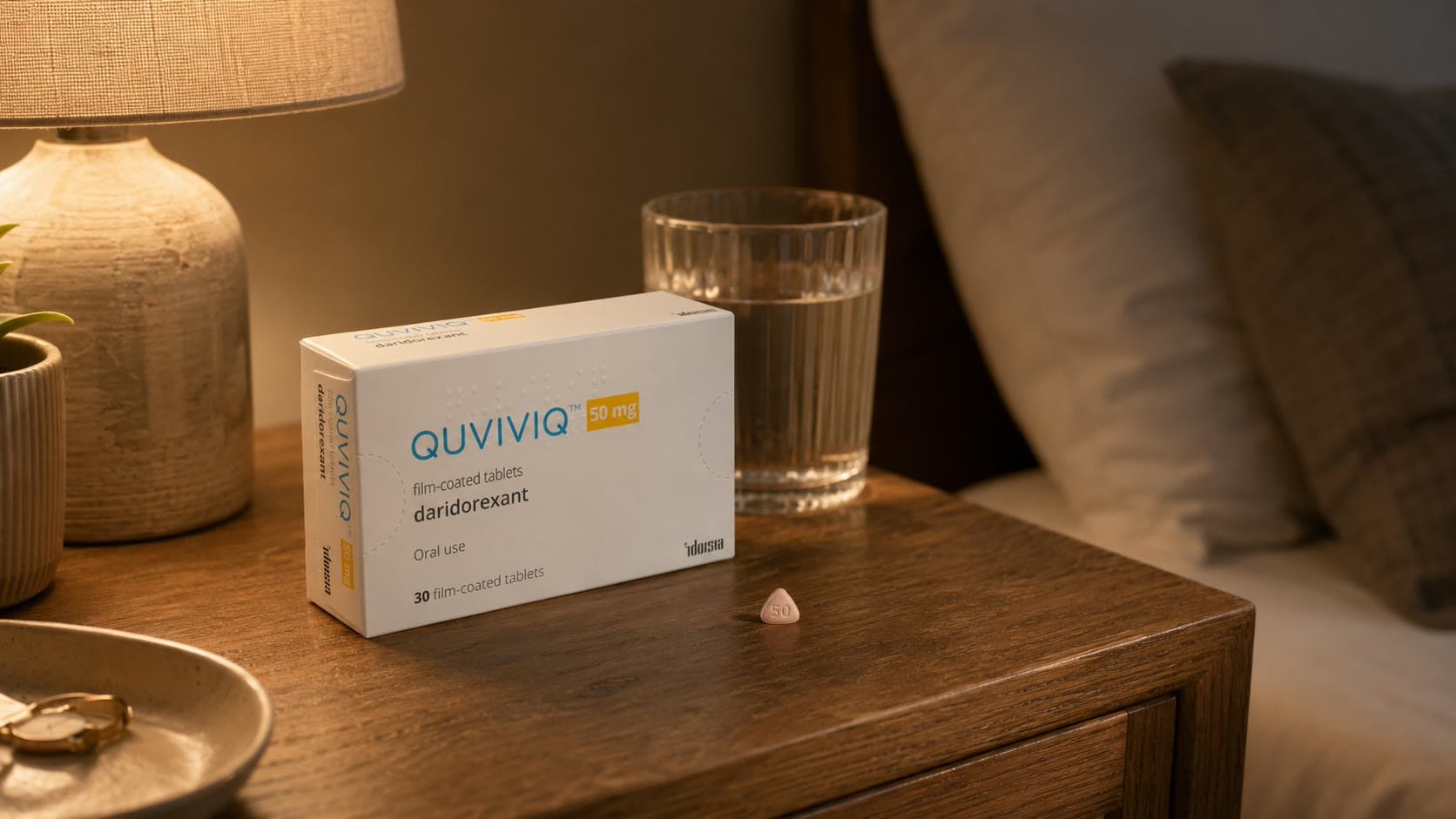
Learn about Quviviq
What about melatonin?
Melatonin is a hormone your body makes naturally in the evening to signal that it's time to sleep. In the UK it's a prescription only medicine – the melatonin gummies sold in the US aren't licensed for sale here.
For insomnia, prescription melatonin is a slow-release tablet taken shortly before bed. It's licensed for adults aged 55 and over as a short-term treatment, usually for up to 13 weeks. Outside that group, prescribing is off-label – a clinician will only consider it after discussing the evidence and alternatives with you.
Melatonin can help with falling asleep and with overall sleep quality. It's generally well tolerated and isn't associated with dependence.
As with any treatment at Newcastle Sleep Clinic, melatonin is only prescribed after clinician review. It works best alongside the sleep habits support we offer.
Learn about melatonin
Concerned about sleep medication?
That's completely understandable. Many people worry about things like dependence, feeling groggy, or 'getting stuck' on tablets. Here's how our approach stays safe:
If a clinician thinks you may be suitable, one option we may discuss is daridorexant (Quviviq). This is only prescribed if a clinician confirms it's appropriate.
Your journey to better sleep
Our Newcastle Insomnia Clinic
A proper assessment.
Answer a short set of questions about your sleep. Your answers tell you whether insomnia looks likely and what to do next. If treatment is an option, a UK-registered clinician at The Independent Pharmacy reviews your full consultation before anything is prescribed.
Today

Retrain how you sleep.
Work with a dedicated sleep specialist on falling asleep and staying asleep, with behavioural support built on CBT-I principles. Bed becomes a cue for sleep again, with fewer awakenings and steadier energy.
Months 1–6

Make it stick.
Strengthen the habits that hold up long term. Learn your triggers, handle the occasional bad night with confidence, and keep the progress.
Months 7–12
Do you have a different sleep disorder?
Insomnia symptoms can have other causes
A big reason people seek insomnia treatment in Newcastle is because they've tried everything, such as magnesium, early nights, no screens, and nothing sticks. Sometimes that's because the real problem isn't insomnia on its own.
Sleep apnoea can look like insomnia. Some people with obstructive sleep apnoea wake repeatedly and think they just have insomnia, when breathing interruptions may be the cause. Also, restless legs can keep you awake. An urge to move your legs at night, or crawling/tingling feelings, can make it hard to settle and stay asleep.
Stress and anxiety, low iron, pain, medication side effects, caffeine timing, alcohol, and irregular routines can all disrupt sleep. So can where you live – a flat above the bars on Collingwood Street, or a student house in Jesmond where nobody keeps the same hours. That's why our assessment screens for more than one condition before recommending a next step.

Newcastle Insomnia Clinic FAQs
Insomnia can be short-term or chronic. Chronic insomnia usually means persistent problems falling asleep, staying asleep, or waking too early, with daytime impact. It often happens at least three nights a week for several months. At our insomnia clinic in Newcastle, we assess these patterns carefully before recommending treatment.
Stress can trigger insomnia, but insomnia can continue even after the stressful period ends. If sleep problems are persistent and starting to affect your day, an assessment helps identify what's keeping it going.
Yes. This is sometimes called COMISA (co-morbid insomnia and sleep apnoea). That's why we screen for breathing-related symptoms as well as insomnia patterns.
It's very common to feel shattered all day and then wide awake at night. One reason is that the brain can start to link bedtime with wakefulness, worry, and trying to sleep. The harder you push for sleep, the more alert your body can become.
This is also why CBT-I works well for many people. It helps break that learned association and rebuilds a stronger sleep signal, so bed becomes a cue for sleep again (not stress).
For many people, CBT-I is the most effective long-term approach because it targets the patterns that cause insomnia to persist. Medication may be considered in some cases after clinician review and safety screening.
Quviviq (daridorexant) may be considered for some people with chronic insomnia when clinically appropriate, after a clinician reviews your assessment and confirms suitability.
No. You can self-refer and complete the assessment online. If we think you need NHS specialist input, we'll explain the safest next steps.
Most people can complete the assessment in minutes. Clinician review timing is typically the same working day, depending on capacity, and is often faster than many traditional referral routes. Many people across Newcastle choose our service to avoid long waits.
People choose our private insomnia clinic in Newcastle because:
- we offer evidence-based screening tools and structured assessment
- we check for overlap (insomnia, sleep apnoea, restless legs syndrome)
- the process is secure and discreet
- you get a clear plan written in plain English
- we focus on the safest next step, not quick fixes
Some situations need urgent or in-person assessment rather than an online pathway. Seek urgent medical advice by calling 999 if you have:
- sudden severe sleepiness that is new and making it unsafe to stay awake (for example while driving or working)
- episodes of collapse, blackouts, or weakness triggered by emotions
- new neurological symptoms (for example seizures, new severe headaches, or new confusion)
- severe chest pain, severe breathlessness, or rapidly worsening heart or lung symptoms
- a severe mental health crisis or thoughts of harming yourself or others
- dangerous sleep behaviours (such as injuring yourself or others while asleep)
About the author

Suzannah Torres
RPSGT · AHCS Registered Clinical Physiologist
Suzannah Torres is a highly specialised respiratory sleep physiologist with over 20 years’ experience in NHS sleep and respiratory medicine. She is RPSGT certified and AHCS registered, with advanced expertise in sleep apnoea assessment, CPAP therapy, and complex respiratory sleep pathways.
Suzannah has worked across multiple NHS trusts, including Manchester University NHS Foundation Trust and Macclesfield District General Hospital. Her experience includes full polysomnography (PSG), home respiratory sleep testing, CPAP setup and compliance clinics, and managing patients with complex care needs. She has also led CPAP compliance pathways within NHS services.
Her approach is structured, evidence-based and patient-focused, ensuring accurate diagnosis and safe management of obstructive sleep apnoea and related respiratory sleep disorders.
- Professional registration
- AHCS (Academy for Healthcare Science)
- RPSGT (Registered Polysomnographic Technologist)
Medically reviewed
This page was last medically reviewed by Suzannah Torres on .

Suzannah Torres
RPSGT · AHCS Registered Clinical Physiologist
Newcastle Sleep Clinic is committed to providing clear, accurate and evidence-based information about sleep health, insomnia, sleep apnoea and related conditions.
Our content is regularly reviewed and updated to reflect current UK clinical guidelines, including recommendations from NICE. All treatment pathways described on this website are subject to individual clinical assessment and review.
Read our editorial policy to see how our content is written, reviewed and kept up to date.