Newcastle Sleep Clinic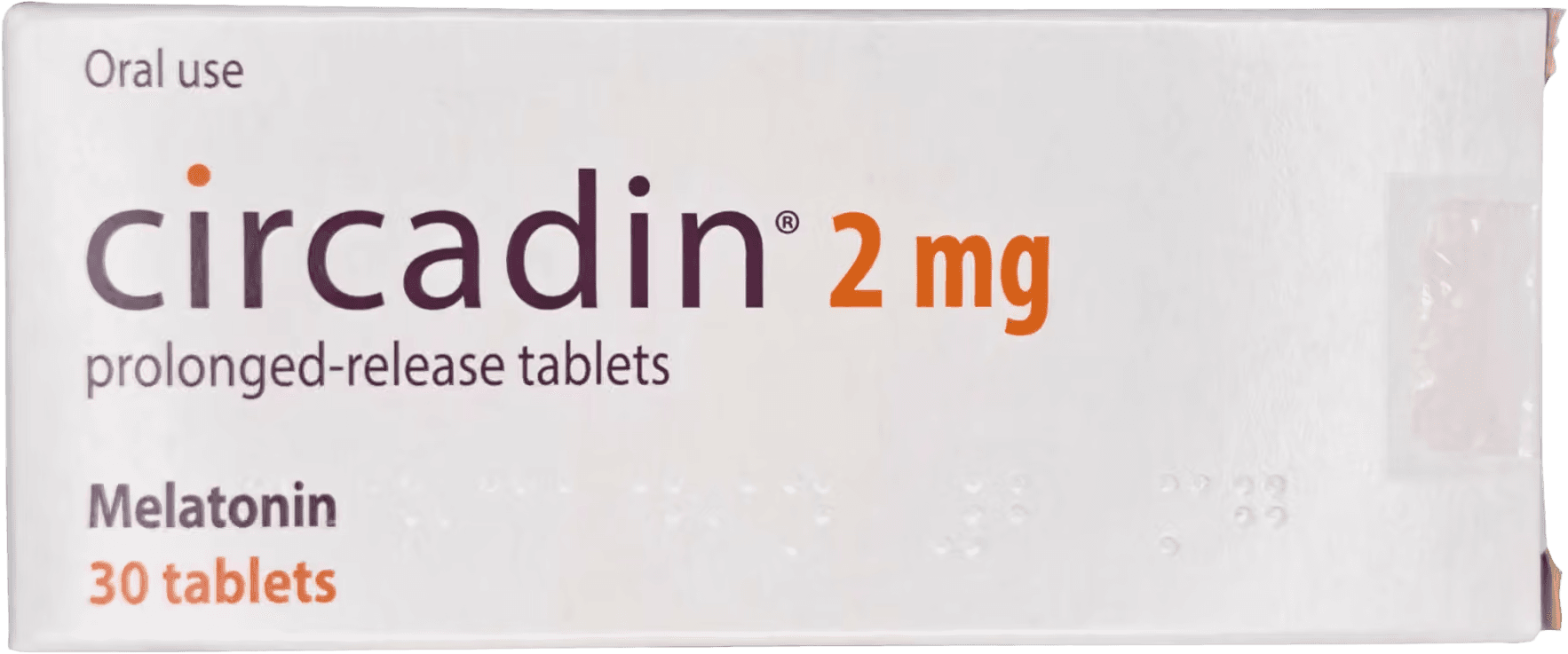

A hormone your body already makes
What is melatonin and how does it work for sleep
Melatonin is a hormone produced by the pineal gland in response to falling light levels.1 As evening approaches, levels rise. By morning they fall again as your body prepares to wake. When this rhythm is aligned with the life you're living, sleep tends to arrive at roughly the right time without much effort.
Persistent insomnia is often driven by heightened arousal at bedtime – a mind that won't settle, or a bed that has become associated with lying awake rather than sleeping. Melatonin levels here are usually normal, which is why the first-line treatment for long-term insomnia is CBT-I, a structured behavioural programme, rather than medication.4 In practice the two often overlap – months of broken sleep tend to pull your body clock out of shape as well, and treating the timing can make the behavioural work easier to sustain.
Timing of melatonin matters more than dose. Melatonin should be taken at a consistent time, 1 to 2 hours before bed – taken at the wrong hour it can be ineffective or shift your body clock the wrong way.2
In the UK, melatonin is a prescription only medicine. It's licensed for short-term treatment of insomnia in adults aged 55 and over, and separately for short-term jet lag in adults.3 A clinical assessment establishes whether treatment is appropriate for you.
Who melatonin is designed to help
Is melatonin right for you?
Melatonin is considered for short-term insomnia in adults aged 55 and over. The issue is usually sleep quality rather than timing – light, broken, unrefreshing sleep, and waking without having rested. Prolonged-release melatonin, prescribed as Circadin or its generic equivalent, is licensed for this and may be considered after clinical review when sleep hygiene measures haven't been enough to resolve persistent sleeplessness.4
If you're under 55 with persistent insomnia, melatonin may still be appropriate, but it isn't the automatic answer. At Newcastle Sleep Clinic, a clinician will look at whether a behavioural approach should come first, alongside or instead.
Signs melatonin may be worth exploring
Consistently unable to feel sleepy until very late, however tired you are
Light, broken sleep that leaves you unrefreshed in the morning
Sleep and waking times that don't fit the day you need to live
Difficulty falling asleep when you need to, despite feeling tired
Waking through the night and struggling to get back to sleep
Daytime fatigue that follows a disrupted sleep pattern
Not everyone with sleep difficulties is a suitable candidate. Clinician review is part of the process for that reason.
Getting a prescription in Newcastle
How to access prescription melatonin in Newcastle
Because melatonin is a prescription only medicine in the UK, it isn't available over the counter – not from pharmacies, and not online without a prior assessment. This differs from many other countries, where melatonin is sold freely as a supplement. In the UK, a melatonin prescription is issued only after clinical review.
The reason is clinical safety. Melatonin interacts with certain medications and is not appropriate in all circumstances. A short consultation ensures the treatment is right for you before anything is prescribed.
At Newcastle Sleep Clinic, that assessment takes place online. You're directed to The Independent Pharmacy to complete a short questionnaire about your symptoms, medical history, and any medications you're taking. A UK-registered clinician reviews your answers and confirms whether melatonin is appropriate for you, the right dose and form, how and when to take it, and any precautions to be aware of. The process is quick, secure, and doesn't require an NHS GP referral or an in-person appointment.
What to expect from treatment
How melatonin works over time
Melatonin is a short-term intervention, not a long-term sleep medication. How quickly it works, and for how long you'll need to take it, depends on why you're using it.
For delayed sleep onset or short-term insomnia in appropriate patients, treatment is intended to be time-limited. Melatonin doesn't address the underlying reasons why sleep has become difficult, which is why it's usually considered alongside behavioural guidance rather than as a standalone solution.
It's worth knowing that melatonin can cause temporary drowsiness the morning after taking it. Headaches, dizziness, and mild stomach discomfort are also reported by some people, though most find side effects minimal at the standard dose.2
Your journey with melatonin
How Newcastle Sleep Clinic supports you

Quick and straightforward
- Complete a short online sleep assessment covering your symptoms and medical history.
- A UK-registered clinician at our partner pharmacy, The Independent Pharmacy, reviews your answers and decides whether prescription melatonin is suitable for you.
- If suitable, you'll receive a clear explanation of the treatment – dose, timing, and any precautions specific to your situation.
Today

Putting it into practice
- Take melatonin at a consistent time each evening, 1 to 2 hours before bed, as directed following your assessment.
- Benefits typically build over the first few weeks of treatment, and your clinician will review how you're responding.
- Alongside the medication, morning daylight exposure, a regular wake time, and winding down away from screens all support better sleep.
Your first few weeks

When melatonin isn't the whole answer
- If your sleep hasn't improved after a course of melatonin, or difficulty sleeping keeps returning, something other than your body clock may be driving it.
- Newcastle Sleep Clinic screens for insomnia, restless legs syndrome, and sleep apnoea – conditions that can look like a timing problem but need different treatment.
- That may involve behavioural support such as CBT-I, further assessment, or a different prescription treatment such as Quviviq, where clinically appropriate.
If sleep problems persist
Newcastle melatonin FAQs
Melatonin for sleep – your questions answered
No. Unlike in countries such as the United States, melatonin is a prescription only medicine in the UK. It cannot legally be purchased from a pharmacy in Newcastle or online without a prior clinical assessment. Newcastle Sleep Clinic provides that assessment online, in partnership with The Independent Pharmacy, without needing an NHS GP appointment.
Traditional sleeping tablets sedate the central nervous system to induce sleep. Melatonin works differently – it signals to the brain that it's time to sleep, in line with the body's natural rhythm. It doesn't force sleep, and it doesn't carry the same risks of dependency, and while next morning drowsiness can occur, it's typically milder than with conventional sleeping tablets.
Circadin is a brand-name, slow-release formulation of melatonin (2mg), licensed for short-term insomnia in adults aged 55 and over. It's also available as a generic prolonged-release tablet, which is what's typically prescribed. A separate immediate-release form exists for jet lag.
The most commonly reported side effects are headaches, drowsiness, dizziness, irritability, and mild abdominal discomfort. Most people tolerate melatonin well at the standard dose. While next morning drowsiness is possible, it's generally milder than with conventional hypnotics. If drowsiness is noticeable the morning after, avoid driving or operating heavy machinery until the effect has fully worn off.
For insomnia, treatment is licensed for up to 13 weeks. Many people take it for a shorter period – your clinician will typically review your response after the first few weeks and agree whether to continue, adjust, or stop. Longer courses are only used on specialist advice.
Melatonin doesn't cause dependence, and there are no known withdrawal effects, so a course can be stopped without tapering off. If your sleep hasn't improved by the end of treatment, that's a signal to look at what else may be driving it.
Not everyone is suitable. Melatonin is not recommended during pregnancy or while breastfeeding. People with autoimmune conditions, epilepsy, liver or kidney problems, or those taking certain medications including hormonal contraceptives should discuss suitability with a clinician. Your assessment with Newcastle Sleep Clinic and The Independent Pharmacy screens for these factors as part of the process.
If you snore heavily or your partner has noticed pauses in your breathing at night, mention this in your assessment – snoring of this kind can indicate sleep apnoea, which needs different treatment.
About the author

Andy Boysan
BPharm (Hons) · GPhC Registered Pharmacist
Andy Boysan is a GPhC-registered pharmacist and co-founder of The Independent Pharmacy, with over 30 years’ experience across community pharmacy and specialist settings. His expertise covers clinical governance and regulatory compliance, patient safety and quality improvement, and medicines management and optimisation.
Andy graduated from the University of Bath in 1997 with a BPharm (Hons) in Pharmacy. He has held senior leadership roles managing individual pharmacies, clusters and wider regions for major national chains, with responsibility for performance, regulatory compliance and standards of patient care.
He now leads the clinical and operational strategy at The Independent Pharmacy, overseeing regulatory compliance and ensuring the pharmacy operates to high standards of quality and governance.
- Professional registration
- GPhC 2047716 (General Pharmaceutical Council)
- BPharm (Hons), University of Bath
Medically reviewed
This page was last medically reviewed by Suzannah Torres on .

Suzannah Torres
RPSGT · AHCS Registered Clinical Physiologist
Newcastle Sleep Clinic is committed to providing clear, accurate and evidence-based information about sleep health, insomnia, sleep apnoea and related conditions.
Our content is regularly reviewed and updated to reflect current UK clinical guidelines, including recommendations from NICE. All treatment pathways described on this website are subject to individual clinical assessment and review.
Read our editorial policy to see how our content is written, reviewed and kept up to date.